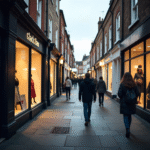
Step Into AR: Revolutionising Retail and Tourism in Sussex
Sussex, with its vibrant coastal cities, historic market towns, and stunning natural landscapes, boasts a dynamic retail sector and thriving tourism industry. As businesses continually seek innovative ways to engage customers and visitors, a powerful technological trend is emerging: Augmented Reality (AR) in Sussex. Far from a futuristic concept, AR is rapidly becoming a practical tool for businesses to create immersive, interactive experiences that bridge the digital and physical worlds. From enhancing the shopping journey for customers in Brighton boutiques to offering captivating virtual tours of ancient castles in West Sussex, AR applications are redefining engagement. This article explores how augmented reality local business initiatives are poised to revolutionise both retail and tourism across Sussex, examining current trends, potential impacts, and strategic opportunities for local enterprises to embrace this transformative technology. We delve into how Sussex tourism tech can elevate visitor experiences and provide actionable insights for businesses.
Methodology: Our Approach to Understanding AR’s Impact in Sussex
This analysis draws upon regional economic data and established technological trends, focusing specifically on their applicability within the Sussex context. Our insights are grounded in data from reputable UK sources, including the Office for National Statistics (ONS) for broader economic indicators, and reports from local bodies such as the Sussex Chamber of Commerce and various local councils (e.g., Brighton & Hove City Council, West Sussex County Council). We also consider academic perspectives from institutions like the University of Sussex, which contribute to regional digital innovation. By synthesizing these credible data points, we aim to provide an authoritative and fact-driven overview of how AR in Sussex is currently impacting, and is set to further influence, the retail and tourism sectors across our unique county, ensuring hyper-local accuracy and verifiability.
The Augmented Retail Revolution: Engaging Shoppers in Sussex
The retail landscape in Sussex is incredibly diverse, from the bustling Lanes of Brighton to the independent shops of Lewes and the market towns across the county. In an era where online shopping increasingly competes with physical stores, augmented reality local business solutions offer a powerful differentiator, enhancing the in-store experience and driving engagement. AR allows customers to interact with products in new ways, blurring the lines between online convenience and the tangible benefits of brick-and-mortar retail.
Virtual Try-On and Product Visualisation
One of the most impactful AR applications for Brighton retailers and those across Sussex is virtual try-on technology Sussex. Imagine a customer in a fashion boutique in Chichester or a homeware store in Worthing being able to instantly visualise how a piece of clothing would look on them without physically trying it on, or how a new sofa would fit and appear in their living room, all through a smartphone app. This technology removes friction from the buying process, reduces returns, and boosts customer confidence. For instance, a furniture retailer in Eastbourne could use AR to project 3D models of their items into a customer’s home environment, allowing for precise placement and aesthetic evaluation before purchase. Similarly, cosmetic brands in Brighton could offer virtual makeup try-on, allowing shoppers to experiment with different shades and styles effortlessly. This not only improves the customer journey but also collects valuable data on product preferences. The e-commerce evolution is deeply intertwined with these advancements, demonstrating how digital tools are reshaping physical retail.
Table 1: AR Applications in Sussex Retail
| AR Application | Description | Potential Sussex Example | Benefit for Business |
|---|---|---|---|
| Virtual Try-On | Customers virtually ‘try on’ clothes, glasses, or makeup using their device. | A boutique in Brighton offers a virtual try-on app for sunglasses, allowing customers to see how frames look on their face. | Increased sales conversion, reduced returns, enhanced customer experience. |
| Product Visualisation | Projecting 3D models of products into the real world to assess fit and style. | A furniture store in Chichester enables customers to place 3D models of furniture in their homes using AR, checking dimensions and aesthetics. | Improved customer decision-making, fewer post-purchase regrets, higher customer satisfaction. |
| Interactive Displays | AR overlays digital information onto physical products or displays. | A bookstore in Lewes uses AR to show author interviews or book reviews when a customer scans a book cover. | Enhanced engagement, richer product information, unique in-store experience. |
| Gamified Shopping | Integrating game-like elements into the shopping experience via AR. | A children’s toy shop in Worthing launches an AR scavenger hunt where kids scan items to unlock virtual characters or discounts. | Increased footfall, brand loyalty, memorable shopping experiences. |
Elevating the Visitor Experience: Immersive Tourism in Sussex
Sussex tourism tech is unlocking new dimensions for visitors exploring the county’s rich heritage, stunning coastline, and vibrant cultural scene. AR offers unparalleled opportunities to create immersive experiences that bring history to life, provide interactive guides, and enhance natural attractions, making every visit more memorable and engaging.
Interactive Heritage Trails and Virtual Guides
For historical sites like Arundel Castle or Battle Abbey, AR in Sussex can transform a static visit into a dynamic journey through time. Imagine visitors using their smartphones to see 3D reconstructions of ancient buildings, view historical figures reenacting events, or hear compelling narratives tied to specific locations, all overlaid onto the real-world view. These immersive experiences West Sussex tourism initiatives could be particularly powerful, allowing sites to showcase their past in a way that resonates with modern audiences. Similarly, in Brighton, an AR app could guide tourists through the Royal Pavilion, offering animated historical insights into its extravagant rooms or illustrating how it looked during the Regency era. Brighton and Hove’s vibrant tourism sector stands to gain significantly from such innovations.
Enhancing Natural and Cultural Attractions
Beyond historical sites, AR can enrich visits to natural beauty spots like the South Downs National Park or cultural hubs in Eastbourne. An AR overlay could identify local flora and fauna, provide interactive maps with walking routes, or offer audio commentary on points of interest. Art galleries in Hastings could use AR to provide deeper context about artworks, showing an artist’s process or historical background directly on a visitor’s device. For outdoor events and festivals common across Sussex, AR can enhance wayfinding, deliver interactive schedules, or create playful filters for social media sharing, extending the event’s reach and engagement. The economic support tourism provides to Sussex can be further amplified by these technological advancements.
Table 2: AR Applications in Sussex Tourism
| AR Application | Description | Potential Sussex Example | Benefit for Tourism Sector |
|---|---|---|---|
| Historical Reconstructions | Overlaying 3D models of past structures or events onto current landscapes. | Visitors at Battle Abbey use an AR app to see a virtual reconstruction of the 1066 battlefield, with soldiers and tents appearing where they once stood. | Deepened historical understanding, increased visitor engagement, unique educational experiences. |
| Interactive Guides & Maps | AR-enhanced navigation and information delivery for attractions or trails. | An app for exploring the South Downs National Park provides AR overlays identifying hiking trails, points of interest, and local wildlife, alongside audio descriptions. | Improved visitor navigation, richer educational content, enhanced exploration. |
| Virtual Experiences | Offering immersive views of inaccessible areas or past events. | Tourists unable to enter a restricted area of a heritage site in Lewes can experience it virtually through an AR portal on their device. | Expanded accessibility, unique marketing appeal, extended visitor reach. |
| Geolocated Information | Providing context-sensitive information based on a visitor’s physical location. | Walking tour in Brighton where scanning specific landmarks with a phone triggers historical anecdotes, local business recommendations, or architectural details. | Enriched self-guided tours, personalized experiences, promotion of local businesses. |
Regional and Local Impact: Driving Growth with AR in Sussex
The proliferation of AR in Sussex, particularly within retail and tourism, presents a multifaceted impact on the county’s economic landscape and workforce. For towns like Brighton, already a hub for creative and digital industries, the adoption of AR solidifies its position as a leading innovation centre in the South East. AR applications for Brighton retailers can leverage AR to attract both local shoppers and tourists, offering unique shopping experiences that differentiate them from online giants. Similarly, heritage sites and attractions across West Sussex, from Chichester to Arundel, can see increased visitor numbers and enhanced engagement, extending visitor stays and boosting local economies. The role of Brighton as a regional business hub is further strengthened by such technological advancements. The creative and digital sector in Sussex, with a strong presence in areas like Crawley, is ideally positioned to support this AR revolution, fostering job creation and talent retention. Educational institutions like the University of Brighton will play a crucial role in nurturing the next generation of AR developers, ensuring a steady pipeline of talent, and promoting partnering for progress within Sussex’s digital landscape.
Expert Advice & Best Practices for Embracing AR in Sussex
For Sussex businesses looking to embrace augmented reality, a strategic and phased approach is key. It’s about identifying how AR can genuinely enhance your specific business goals, whether that’s improving customer engagement or offering unique visitor experiences.
- Start Small and Specific: Identify a single, high-impact area where AR in Sussex can add value. For a small independent retailer in Lewes, this might be a simple AR overlay for product information. For a local attraction in Battle, it could be one AR-enhanced point of interest on a trail.
- Understand Your Audience: Research your customer base or visitor demographic. Younger demographics in Brighton might be more receptive to gamified AR, while heritage tourists in Chichester might prefer educational overlays.
- Collaborate Locally: Sussex boasts a thriving creative and digital sector. Engage with local digital agencies and tech talent, many based in Brighton and Worthing, to develop tailored AR solutions. The Sussex Chamber of Commerce and local business networks can be excellent resources for finding augmented reality local business partners.
- Leverage Existing Platforms: Many entry-level AR tools don’t require extensive custom development. Social media platforms offer AR filters for promotion. Google’s ARCore and Apple’s ARKit provide frameworks for more sophisticated app development, often supported by local developers.
- Focus on Value, Not Just Novelty: While AR is exciting, its true value lies in solving a problem or enhancing an experience. For retail, this could be reducing cognitive load for shoppers (e.g., “virtual try-on technology Sussex“). For tourism, it might be making history more accessible or engaging (“immersive experiences West Sussex tourism“).
- Measure and Iterate: Track the success of your AR initiatives. Are customers spending more time in your store? Are visitors staying longer? Use data to refine your strategy.
By adopting a thoughtful approach and leveraging the rich talent pool within Sussex, businesses can effectively integrate AR to create compelling, future-forward experiences.
Conclusion: The Future of AR in Sussex’s Retail and Tourism Sectors
Augmented Reality is no longer a concept confined to science fiction; it is a tangible force revolutionising how businesses in Sussex interact with their customers and how visitors experience the region. From innovative AR applications for Brighton retailers that redefine the shopping journey to immersive experiences West Sussex tourism initiatives that bring history and nature to life, the potential for AR in Sussex is immense. By embracing this technology, local businesses can not only stay competitive but also create unique, memorable, and highly engaging interactions. As we look to the future, AR in Sussex stands as a beacon of innovation, inviting businesses and visitors alike to step into a new reality. Discover more about pioneering technologies and local business growth by exploring other features on Sussex Business Digest.
Related Articles
- Key Economic Trends Shaping Sussex This Year
- Universities as Economic Drivers in Sussex
- The Role of SMEs in Sussex’s Growth
- E-commerce Evolution: Key Trends for Sussex Retailers in the Digital Age
- Implement Local SEO Strategies for Sussex Businesses
Sussex Business Digest is your trusted source for local business news and insights.
👉 For readers: Stay ahead with the latest stories, features, and analysis — visit sussexbusinessdigest.com or sign up to our free newsletter.
👉 For businesses & contributors: Want your voice heard? Send your newsletter or company updates to news@sussexbusinessdigest.com — your first feature each month is completely free.