How to Manage Cash Flow and Forecasting
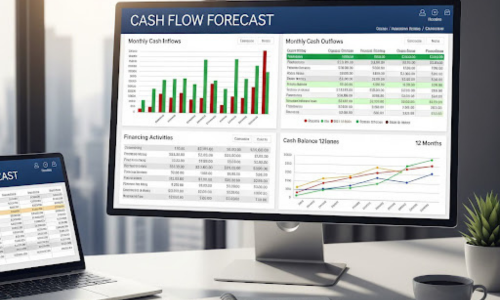
Cash flow is the lifeblood of your business. It’s the simple measurement of money moving in (from sales, loans, or investments) and money moving out (to pay suppliers, rent, and salaries). A profitable business can still fail if it runs out of cash because payments are delayed. This guide explains how to manage your cash today and predict what you’ll have tomorrow.
1. Understanding Cash Flow vs. Profit
Many entrepreneurs confuse these two core concepts:
- Profit: What’s left over when you subtract expenses from revenue. It tells you if your business model works. You might make a sale in December but not get paid until February; your December profit looks good, but the cash isn’t there yet.
- Cash Flow: The actual money in your bank account right now. It is critical for daily survival—paying staff and suppliers on time.
Managing cash flow means making sure the money comes in faster than it goes out.
2. The Power of Cash Flow Forecasting
A Cash Flow Forecast is simply a forward-looking plan that estimates the money you expect to receive and pay out over a set period (usually the next 3, 6, or 12 months).
Why Forecasting is Essential
Forecasting acts as an early warning system. It helps you:
- Avoid Shortfalls: Identify months where you will have more money going out (e.g., quarterly VAT or a large supplier bill) than coming in. This gives you time to act.
- Plan Investments: Know exactly when you can afford to invest in new equipment, hire staff, or launch a marketing campaign without running your bank account down to zero.
- Increase Confidence: Provide clear data to banks or investors (as discussed in [Building a Business Plan that Attracts Investment]), boosting their confidence in your financial stability.
How to Build a Forecast
You can create a reliable forecast using simple spreadsheet software:
- Establish Your Start: Note your current cash balance in your business bank account.
- Forecast Inflows: List all expected money coming in (customer payments, loans, grants). Crucially, use the date you expect the money to hit your account, not the date you made the sale.
- Forecast Outflows: List all expected payments (salaries, rent, utility bills, taxes, supplier invoices). Again, use the date the money will leave your account.
- Calculate Net Flow: Subtract your outflows from your inflows for each month. The result is your Net Cash Flow. Add this to the start-of-month balance to get your end-of-month balance.
3. Strategies to Improve Cash Flow
Once you have a forecast, you can use these practical steps to manage the flow of money better:
Accelerate Money Coming In
- Invoice Promptly: Send invoices immediately after completing the work. Use accounting software to automate this and track late payments.
- Encourage Early Payment: Offer a small discount (e.g., 2%) if clients pay within 7 days. This can be more valuable than waiting 30 days.
- Simplify Payments: Offer multiple, easy payment options (online cards, direct bank transfer).
Control Money Going Out
- Manage Supplier Terms: Negotiate longer payment terms with your suppliers (e.g., paying within 60 days instead of 30 days). Maintaining a good relationship with suppliers (as advised in [Bookkeeping and Tax Deadlines Explained]) can make this easier.
- Review Spending: Regularly check for recurring expenses you no longer use (like unused software subscriptions). Cut any expenditure that is not essential to growth.
- Lease vs. Buy: Instead of making a large cash outlay for equipment, consider leasing or renting to preserve your cash reserves.
Build a Buffer
- Cash Reserve: Aim to build a cash reserve that can cover at least three months of your core operating expenses (rent, salaries, utilities). This acts as a safety net against unexpected client delays or quiet periods.
4. Resources for Tracking Cash Flow
You don’t need expensive software to start. Here are resources for tracking and managing your business’s cash:
Free Templates
- Wenta Cashflow Forecast Template: Offers a free, downloadable Excel template specifically designed for startups and SMEs to plan their first 12 months.
- Xero Cash Flow Template: Provides a free, editable template from a leading accounting software provider, often including a guide on how to use it.
Integrated Software
These accounting platforms (which are MTD-compliant for tax filing) include real-time cash flow forecasting tools:
Our advice: The simplest way to start forecasting is to use the free templates first. This proactive approach ensures you never face a cash crisis that blindsides your business. For strategic advice on managing difficult payment scenarios, reach out to your local Coast to Capital Growth Hub
Sussex Business Digest is your trusted source for local business news and insights. For readers: Stay ahead with the latest stories, features, and analysis — visit sussexbusinessdigest.com or sign up to our free newsletter.
For businesses & contributors:
Want your voice heard?
Send your newsletter or company updates to news@sussexbusinessdigest.com and we’ll do the rest.
Your first feature each month is completely free.